Homeowner Tips: Roofing, Siding & Exterior Advice | PowerHouse Roofing| Roofing Education: Tips, Guides & Insights for Utah Homeowners | PowerHouse Roofing
How Utah Snow and Ice Damage Your Roof: And What to Look For
A Homeowner’s Guide for Mountain and Wasatch Front Living
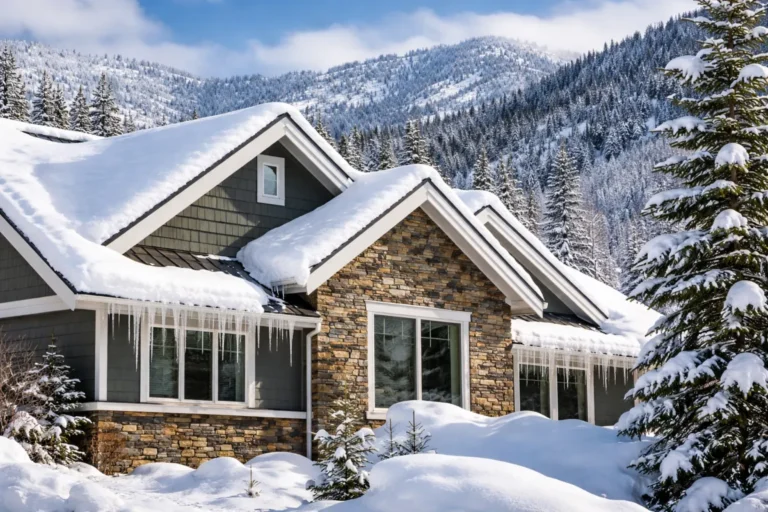
If you live in Utah, snow isn’t just pretty. It’s heavy.
In places like Park City, Alpine, and the higher benches of Draper, roofs carry serious snow loads every winter. Even in Provo and along the Wasatch Front, freeze-thaw cycles quietly wear roofing systems down.
This guide walks you through:
- How snow and ice actually damage a roof
- What ice dams are and why they form
- Warning signs to look for
- When to take action
How Snow Load Affects Roofs in Utah
Heavy Snow in Park City and Higher Elevations
Snow sitting on a roof adds weight. A lot of it.
Fresh snow might not seem like much. But when it compacts, gets wet, or refreezes, it becomes dense and heavy. In mountain areas like Park City, roofs can carry thousands of pounds of additional load.
Most well-built homes are engineered for this. Problems usually show up when:
- The roof is older
- Framing was undersized
- Snow accumulates unevenly
- Ice traps weight in one area
Sagging ridgelines or interior ceiling cracks are signs that the structure may be stressed.
What Ice Dams Really Do to a Roof
Freeze-Thaw Cycles Across Utah
Utah weather changes fast.
Warm afternoons melt snow. Cold nights refreeze it. That cycle repeats over and over.
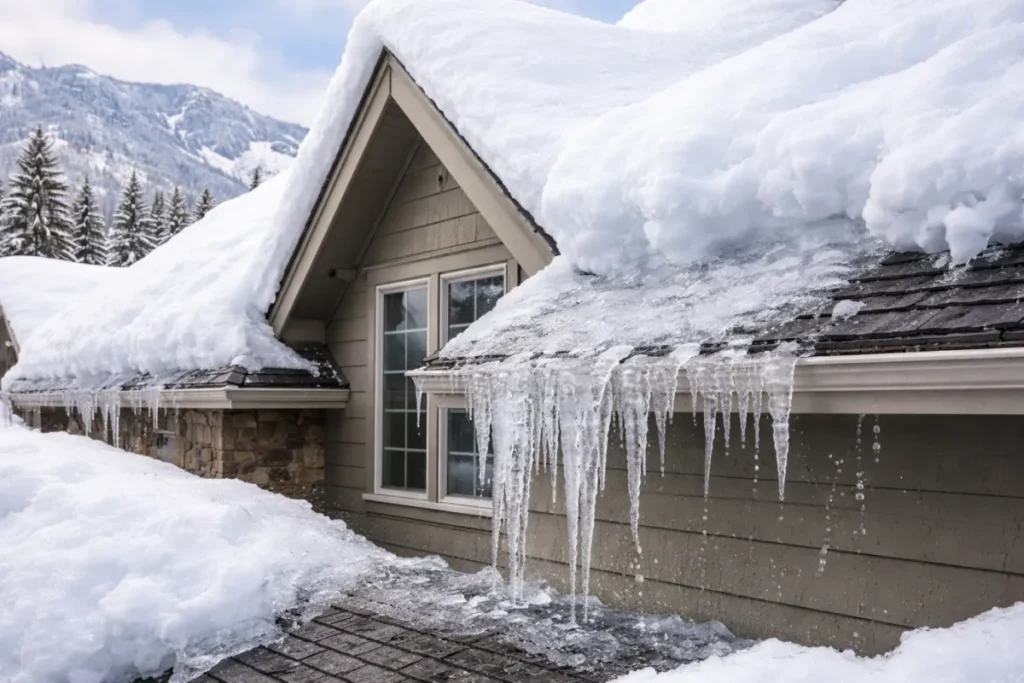
When snow melts on the upper part of the roof and refreezes near the eaves, it creates a ridge of ice. That ridge is called an ice dam.
Once that happens:
- Water backs up under shingles
- Underlayment gets wet
- Decking absorbs moisture
- Insulation and drywall can be affected
You might not notice it immediately.
You’ll notice it when a stain shows up on the ceiling weeks later.
Wind Makes Winter Damage Worse
Strong Wind Exposure
Homes along the Wasatch Front deal with strong canyon winds.
Wind does two things:
- It drives snow into valleys and corners.
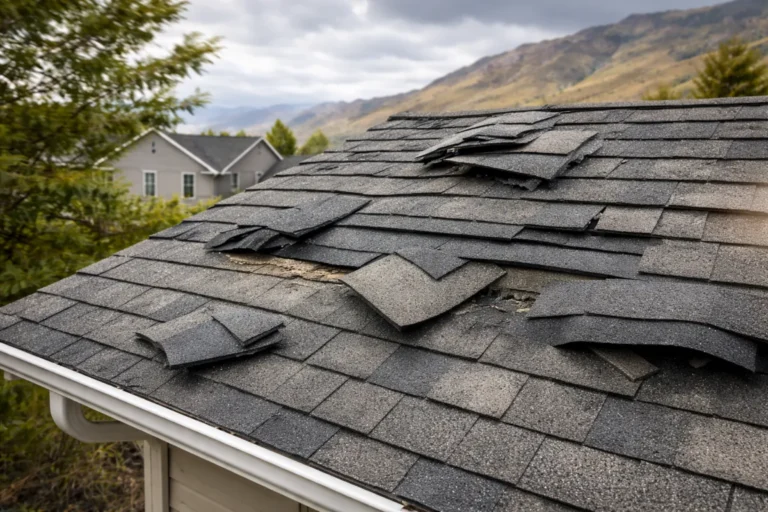
- It lifts shingle edges, especially on aging roofs.
When shingles loosen, melting snow finds its way underneath.
Over time, that leads to:
- Nail pops
- Flashing separation
- Shingle loss
- Moisture intrusion
Wind and snow together are harder on a roof than either one alone.
Signs Your Roof Has Snow or Ice Damage
If your roof is 10 to 15 years old, winter damage becomes more likely.
Watch for:
- Icicles forming along eaves repeatedly
- Ice buildup at gutters
- Granules collecting in downspouts
- Water stains on ceilings
- Shingles that look curled or lifted in spring
- Damp attic insulation
Most damage shows up after winter, not during it.
Spring is when small issues become visible.
How to Prevent Snow and Ice Roof Damage
Improve Attic Insulation and Ventilation
Ice dams often start inside the home.
Uneven attic temperatures cause melting in the wrong places. Proper airflow keeps roof surfaces consistent and reduces refreezing near eaves.
Balanced ventilation matters more than most homeowners realize.
Keep Gutters Clear Before Winter
Clogged gutters trap water.
When snow melts and has nowhere to drain, ice builds faster. Clean gutters before the first storm, especially in tree-heavy areas.
Schedule Before-and-After Winter Inspections
After heavy snow seasons, a professional inspection helps catch:
- Minor flashing separation
- Underlayment exposure
- Early shingle failure
- Valley wear
Catching it early usually means repair instead of replacement.
When Snow Damage Turns Into Replacement?
Most roofs in Utah last:
• Asphalt shingles: 15–20 years
• Architectural shingles: 20–25 years
• Metal roofing: 40+ years
If your roof is already nearing the end of its lifespan, one harsh winter can accelerate the timeline.
If repairs are stacking up year after year, replacement may be the smarter long-term move.